
Israel Iran conflict, Lebanon journalists killed, Middle East tensions, Israel attack news, Iran Israel escalation, journalist casualties Lebanon, war reporting risks.
A Region on Edge
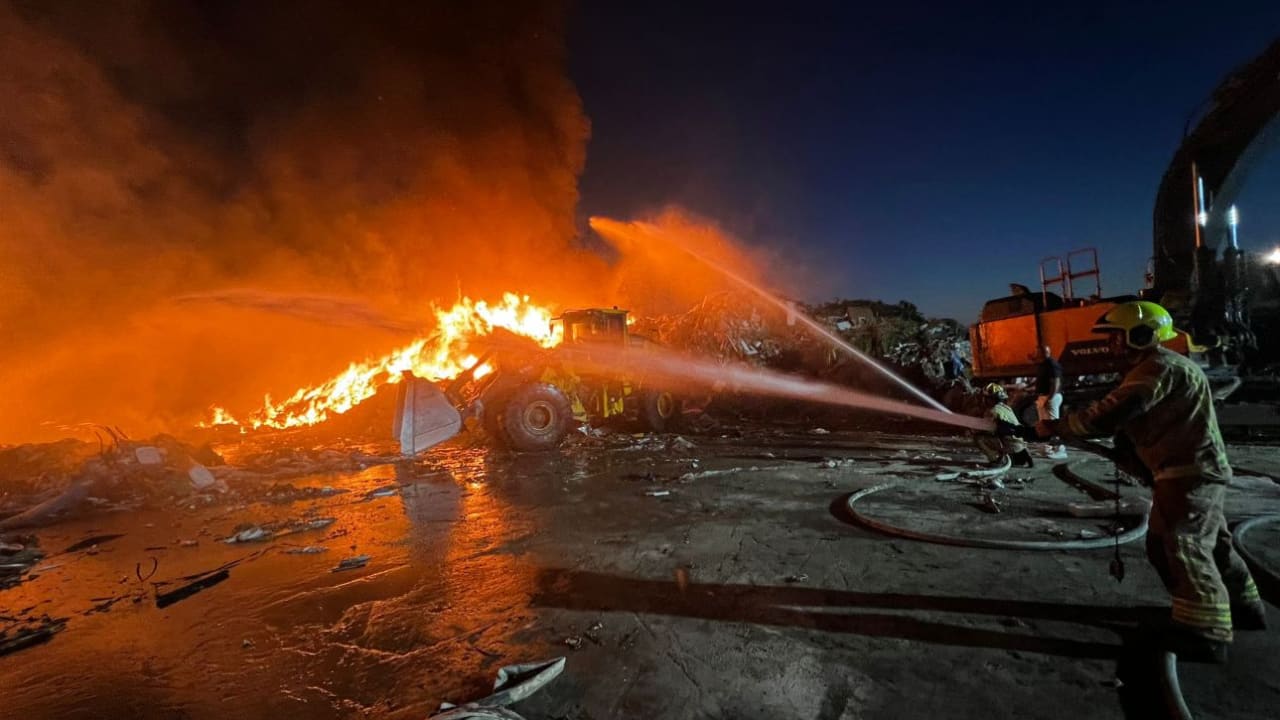
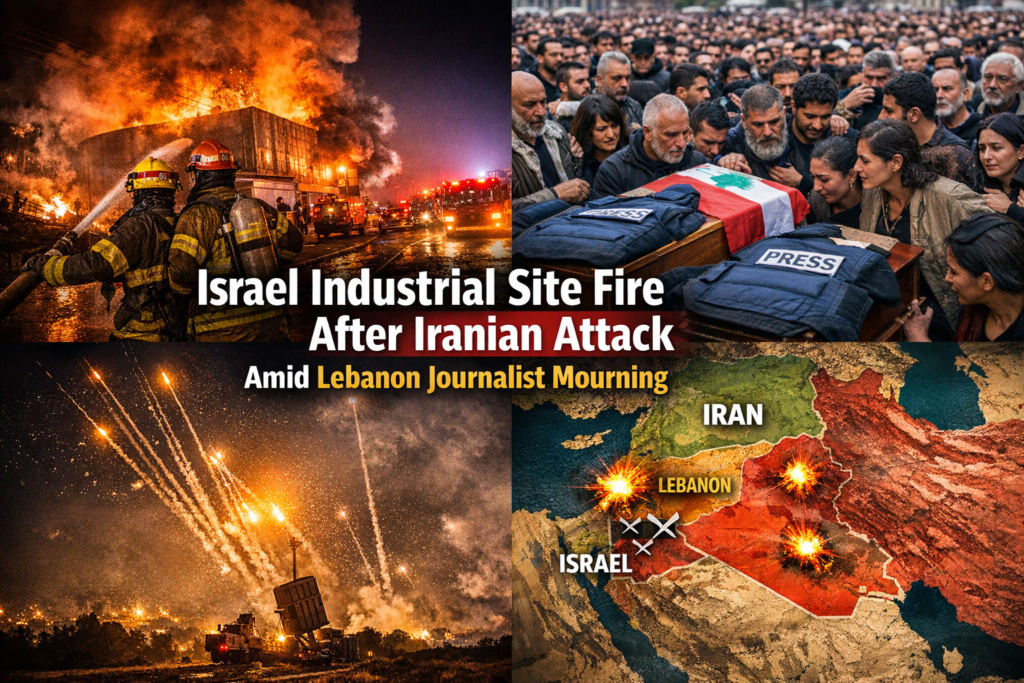
The Israel industrial site fire after Iranian attack has become a defining flashpoint in the latest wave of Middle East tensions. As Israel deals with the aftermath of a sudden industrial blaze reportedly triggered by incoming projectiles, neighboring Lebanon is grappling with grief, mourning journalists killed while covering the conflict.
This dual crisis highlights not only the growing military confrontation involving Iran but also the human cost that continues to mount across borders.
What Happened in Israel?
Late-night alerts sounded across northern Israel as defense systems detected incoming threats. According to official sources, multiple projectiles were launched toward Israeli territory. While interception systems managed to neutralize several, some strikes appear to have landed near a key industrial zone.
The resulting Israel industrial site fire after Iranian attack spread quickly, with flames engulfing sections of the facility. Emergency response teams, including firefighters and medical units, were deployed immediately to contain the blaze.
Authorities stated that:
- The fire caused structural damage to parts of the industrial complex
- Hazardous materials may have been present, complicating firefighting efforts
- No confirmed fatalities have been reported so far
- Investigations are ongoing to determine the exact nature of the strike
The Israel industrial site fire after Iranian attack has raised serious concerns about infrastructure vulnerability, especially in regions close to conflict zones.
Role of Iran and Regional Proxies
Although Iran has not officially claimed responsibility, Israeli officials have linked the incident to Iranian-backed groups operating in the region. One such group is Hezbollah, which has been involved in periodic clashes along the Israel-Lebanon border. Security experts believe the Israel industrial site fire after Iranian attack fits into a broader strategy of indirect confrontation. Instead of direct warfare, attacks are often carried out via allied groups, allowing plausible deniability while maintaining pressure.
This pattern has been observed in:
- Cross-border missile exchanges
- Drone incursions
- Targeted strikes on infrastructure
The escalation following the Israel industrial site fire after Iranian attack signals a potential shift toward more high-impact targets.
Lebanon Mourns Fallen Journalists
While Israel focuses on damage control, Lebanon is witnessing an outpouring of grief. Hundreds gathered in emotional ceremonies to honor journalists killed during recent clashes. The deaths have shocked the media community, as many of the victims were clearly identified as press personnel. These journalists were covering frontline developments when they lost their lives.
Scenes from Lebanon included:
- Large funeral processions filled with mourners
- Tributes from fellow journalists and media organizations
- Calls for justice and accountability
The tragedy has added urgency to discussions around journalist safety in war zones. The mourning in Lebanon stands in stark contrast to the military developments highlighted by the Israel industrial site fire after Iranian attack, showing the human side of geopolitical conflict.
International Reaction and Calls for Accountability
Global reactions to the Israel industrial site fire after Iranian attack and the killings in Lebanon have been swift. Governments and international organizations have urged restraint and emphasized the need to protect civilians.
Key responses include:
- Calls for an independent investigation into journalist deaths
- Appeals for de-escalation between Israel and Iran
- Statements from press freedom groups condemning violence against media
The United Nations has expressed concern that the situation could spiral into a broader regional conflict if tensions are not contained.
Impact on Civilians and Infrastructure
The Israel industrial site fire after Iranian attack underscores how modern conflicts increasingly affect civilian infrastructure. Industrial facilities, once considered secondary targets, are now at risk.
Potential impacts include:
- Disruption of local economies
- Environmental hazards from industrial fires
- Increased fear among civilians living near strategic sites
In Lebanon, the loss of journalists represents a different but equally devastating impact—one that affects truth, accountability, and global awareness.
What Happens Next?
The aftermath of the Israel industrial site fire after Iranian attack leaves many unanswered questions. Will tensions escalate further, or can diplomatic efforts bring stability?
Experts suggest three possible scenarios:
- Controlled De-escalation: Diplomatic pressure leads to reduced hostilities
- Continued Proxy Conflict: Ongoing indirect clashes without full-scale war
- Major Escalation: Direct confrontation between Israel and Iran
The coming days will be critical in determining which path the region takes.
The Israel industrial site fire after Iranian attack is more than just a breaking news story—it is a reflection of a region at a tipping point. While Israel battles the immediate consequences of infrastructure damage, Lebanon mourns journalists who paid the ultimate price for reporting the truth.
Together, these events highlight the complex and deeply human dimensions of modern conflict. As the world watches closely, the need for restraint, accountability, and diplomacy has never been more urgent.
For the latest world updates and real-time news, click here.